In Conversation with Tord Rengenhall: Candela and the New Era of Electric Boating
Q: How does the technology perform in terms of passenger capacity, range, and operational efficiency?
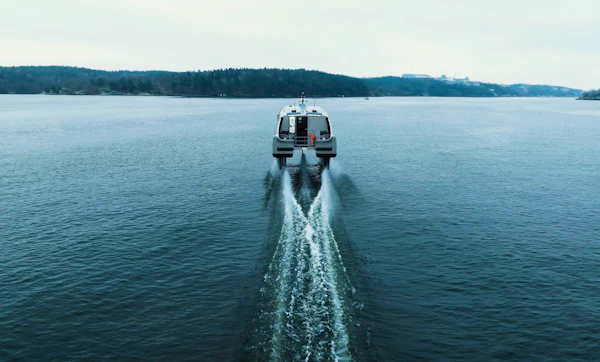
A: The Candela P-12 is a 12-metre electric hydrofoil vessel. Depending on configuration, it carries up to 30 passengers. It cruises at about 25 knots, and its range at service speed is around 40 nautical miles on one charge. The vessel lifts out of the water on computer-controlled foils, which cuts drag dramatically. As a result, it uses up to 80% less energy than a conventional planing boat of similar size. Operators get the speed of a fast ferry with the energy use of a much smaller vessel.

Q: What are the main advantages for commercial operators running regular routes?
A: Low operating cost is the first one. Electricity costs far less than diesel, and an electric drivetrain has very few moving parts to service. Passenger comfort is the second: because the hull flies above the waves, the ride is smooth and quiet, with very little seasickness. The third is flexibility. The P-12 produces almost no wake, so it can run at speed through harbours, canals and protected areas where conventional fast boats must slow down. On many routes, this shortens travel time. Finally, a 30-seat vessel lets operators run smaller boats more often instead of one large boat a few times a day.
Q: How practical is it to integrate Candela vessels into existing infrastructure and charging networks?
A: It’s more practical than most people expect. The P-12 uses standard DC fast charging (CCS), the same technology as electric cars, so operators don’t need specialised marine charging systems. The vessel is light and fits existing pontoons and passenger docks. In most cases, the main job is getting enough grid capacity to the quay. The best place for that is usually at one end of the route, where the boat can top up during turnaround. We help customers plan this from the start.
Q: What does the total cost of ownership look like compared with a fossil-fuel vessel?
A: The purchase price is higher than for a comparable diesel boat. Running costs are much lower, though: energy costs typically fall by 80–90% and maintenance costs drop substantially as well. On a route with high daily use, the extra upfront investment is usually paid back within a few years. Over the vessel’s lifetime, the total cost of ownership is lower than diesel. Where fuel prices are rising and carbon pricing is coming in, the gap will keep growing.

Q: Are there limitations in weather, sea state, routes or loads?
A: Yes, as with any vessel. The P-12 is designed for coastal, archipelago, lake and urban waters, and it can foil waves of up to 1 m significant wave height. In heavier seas, it can come down off the foils and continue at lower speed as a conventional hull. Route length should fit the battery range, with a reserve. For shallow water, the foils are retractable, requiring a minimum water depth of only 1.2 m. Passenger and cargo loads are certified, and the flight control system adjusts automatically to changes in weight. We assess every route before delivery, using wave, depth and traffic data.
Q: What environmental benefits does the technology deliver?
A: The P-12 has zero emissions at the point of use. Compared with a conventional diesel vessel, it uses up to 80% less energy for the same trip, so even on fossil-heavy grids its total emissions are far lower. Charged with renewable electricity, its lifecycle emissions per passenger-kilometre can be comparable to those of an electric car carrying one person. The energy saving is the key point. Making a vessel electric is good, but making it need much less energy is what makes electric operation practical and affordable.
Q: How does the hydrofoil address wake, noise and disturbance to marine ecosystems?
A: When the hull is out of the water, there is almost no wake, so there is no erosion of shorelines, no damage to moored boats and no churning up of the seabed in shallow areas. Electric propulsion is near-silent above the surface and much quieter underwater than a diesel engine. That matters for marine life such as dolphins and fish, which rely on sound. There are also no fuel or oil spills and no exhaust over the water. In sensitive areas like the Adriatic islands and marine parks, these benefits can matter as much as the CO₂ savings.
Q: How important is lifecycle thinking for Candela?
A: It’s central to how we work. We build the hull in lightweight carbon fibre because low weight drives the energy savings over the vessel’s entire life. Our batteries are automotive-grade, sourced from the electric-car industry. That gives us proven quality and access to established recycling and second-life systems. We encourage operators to charge with renewable power wherever possible, and the electric drivetrain needs far less maintenance and far fewer consumables than diesel. We assess the environmental impact over the full life of the vessel, not only while it is operating.

Q: Is electric hydrofoil technology a realistic way to make tourism and recreational boating more responsible?
A: Yes. Tourism is where it can have the most visible impact. Popular coastal areas, including much of Croatia, struggle with noise, wake and pollution from heavy summer boat traffic. Electric hydrofoils let visitors travel between islands and bays quickly without harming what they came to see. It also changes the experience itself: a silent, smooth ride without fumes is simply a better way to see the coast.
Transfers are a clear opportunity. When a large cruise ship arrives, thousands of passengers are often moved into the city centre by fleets of taxis and buses, which adds to congestion and emissions in historic port cities. An electric hydrofoil shuttle can take passengers straight from the ship or cruise terminal to the city centre by water. The transfer is faster, quieter and emission-free, and it eases pressure on the roads and the old town.
Resort transfers work the same way. Split Airport sits right by the sea, so guests could step off their flight and be on the water within minutes. From there, they could ride directly to waterfront hotels and resorts along the coast or on the islands, instead of sitting in summer traffic in a minibus. For the resort, it’s a premium, sustainable arrival experience that sets the tone for the whole stay. In both cases, the transfer stops being a chore and becomes part of the holiday.
Q: How does the vessel behave in challenging conditions, and what if the propulsion or foil system has a problem?
A: The flight control system adjusts the foils many times per second, so the vessel stays level and smooth in conditions that would make a conventional boat slam. When conditions go beyond its foiling limits, it lands and continues as a displacement hull. The system is built with redundancy. If a fault occurs, the vessel comes down off the foils in a controlled way and can still reach port at lower speed. The P-12 has two independent drivetrains (motors and batteries), and it is built and certified to commercial passenger vessel standards.
Q: What training is required for crews moving from conventional vessels?
A: Less than most people expect. Captains need the normal commercial licence for passenger vessels of this size under local maritime rules. In Sweden, for example, that is Fartygsbefäl klass VII. There is no separate hydrofoil licence. The flight control system handles foiling automatically, so the captain drives the boat much like any other vessel, only with more precise electronic controls. Experienced skippers usually adapt within days.
Candela provides a structured training programme covering operation, charging, safety procedures and basic maintenance, along with ongoing operational support. Crews also need to adjust to energy-based route planning: thinking in kilowatt-hours and charging windows instead of litres of fuel.

Q: Where is the greatest potential over the next five to ten years?
A: Urban mobility is the biggest opportunity. Many cities are built on water but barely use it for transport. Electric hydrofoils make it possible to run water routes the way a metro or bus line works: smaller vessels leaving often, so people simply turn up and go without checking a timetable. Because the vessels are fast, quiet and produce no wake, they can run through city centres and connect neighbourhoods, suburbs and islands directly. That is often faster than going by road, and it needs no new bridges, tunnels or rail lines.
Tourism and island connections come a close second, especially in places like the Mediterranean, where demand peaks in summer and environmental pressure is high. That includes cruise and resort transfers. Private boating will grow too, but commercial operators running vessels many hours a day are where the economic and environmental case is strongest.
Q: What needs to happen for electric hydrofoils to become mainstream?
A: Above all, brave customers: operators, cities and regions that don’t just talk about wanting change but are ready to make it happen. They put the first vessels into service, show what works and give others the confidence to follow. Every shift in transport has started with a few early adopters like that.
Charging is often raised as a barrier, but it really isn’t one. Even where the grid connection at a quay is weak, a battery energy storage system (BESS) can charge slowly from the grid and then fast-charge the vessel during turnaround. The technology is already there. What’s needed is the decision and the investment.
Beyond that, regulation has to keep pace: class rules and passenger vessel standards designed with electric and foiling craft in mind, plus permission to run at speed in zones where wake has been the reason for speed limits. Procurement matters too. Public tenders for ferry services should reward lifecycle cost and environmental performance, not only the lowest purchase price.

Q: How will the technology evolve in speed, range, capacity and battery performance?
A: The technology is ready today. The P-12 is already in commercial service, and its speed, range and capacity fit a wide range of real routes. The biggest task now isn’t technical. It’s making the technology known, so operators, cities and decision-makers understand what is already possible and can see it working for themselves.
The next development we see is faster charging. Shorter charging times mean faster turnarounds at the quay, so each vessel can make more departures per day and serve busier routes at higher frequency.
Q: Could electric hydrofoils change how we think about short-distance maritime transport in coastal and island communities?
A: I believe they will. Today, many island communities rely on a few large, slow and expensive ferry departures a day. Smaller, faster electric vessels make it possible to run more frequent departures at lower cost. The sea becomes a route people can use every day, the way a bus line works on land, instead of something you plan your day around. For islands, that can affect everything from commuting and healthcare access to how attractive they are as places to live year-round.
Q: If you could change one perception about electric boats, what would it be?
A: That electric means compromise: slower, shorter range, less capable. With hydrofoils, the opposite is true. You get a faster, smoother and quieter ride at a fraction of the running cost. Once electric propulsion is the norm, I think we’ll look back on noisy, fuel-burning boats leaving big wakes the way we now look at smoky city buses. The coast will be quieter, cleaner and better connected, and boating will be more enjoyable for everyone on and near the water.
