
Eco Antifouling and Nautical Tourism: Understanding the Importance
Pena Autokozmetika d.o.o. has been making antifreeze, car care, and other chemical products for more than 35 years. Ocean Coatings Ltd. has chosen Pena Autokozmetika as a trusted manufacturing partner for its environmentally friendly marine coatings, F2 EcoHull and F2 OptiProp, which are designed for the European market. This partnership will help make the products more accessible and affordable for customers across Europe.
We spoke with Mr Ivan Penić about eco antifouling alternatives and their impact on the nautical industry.
Can you tell us the story behind F2 Eco? What inspired the development of this product, and what challenge were you trying to solve?
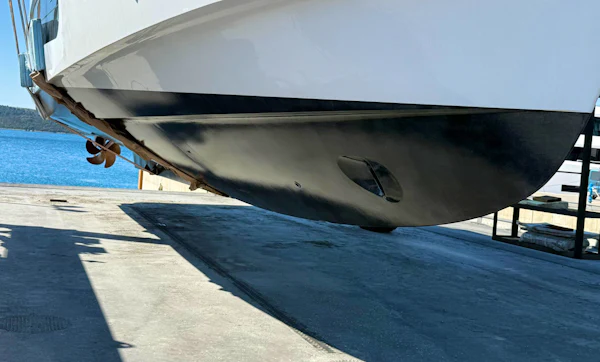
F2 Eco was developed from a very clear challenge: how to protect boat hulls effectively without relying on traditional biocidal antifouling paints. Conventional antifouling works by releasing active substances into the water, while F2 EcoHull takes a different route; it creates an ultra-smooth, hydrophobic surface where marine growth has difficulty attaching in the first place. The goal was to offer boat owners a cleaner, longer-lasting, and lower-maintenance solution that supports both performance and environmental responsibility.

Sustainability is becoming increasingly important in the marine industry. What makes F2 Eco different from conventional alternatives in terms of environmental impact?
The main environmental difference is that F2 EcoHull is biocide-free. It does not kill marine organisms; instead, it reduces their ability to adhere strongly to the hull. This means it avoids the continuous release of copper, zinc, or other toxic substances commonly associated with traditional antifouling systems. F2 Eco also promotes cleaner hulls, reduced drag, and potentially lower fuel consumption (especially for speed boats), which contributes to a smaller operational footprint.
Another important aspect is the impact on people applying the coating. Traditional antifouling products often require protective equipment and careful handling because of their toxic components. F2 EcoHull is completely safe for human health during application and does not require special protective equipment, making the process significantly safer and more user-friendly for applicators and boat owners alike.

Can you explain the materials, technology, or production methods behind F2 Eco that contribute to its sustainability performance?
F2 EcoHull is based on hybrid polymer technology combined with a hard Zeronic™ surface. The coating forms an ultra-smooth, hydrophobic layer with very low surface energy, making it difficult for biofouling organisms to form a strong bond. Unlike soft silicone systems, F2 EcoHull is a hard foul-release coating, giving it better resistance to mechanical damage while still allowing growth to be removed easily during movement or light cleaning. Due to its chemical inertness, meaning it does not react with the surrounding environment, F2 EcoHull provides long-lasting performance without toxic effects on microorganisms, algae, or shellfish.

There is often a perception that sustainable products compromise quality or performance. How does F2 Eco address that concern?
Sustainability does not mean lower performance in this case. F2 EcoHull is designed to reduce adhesion, friction, and drag rather than rely on toxins. When the boat is used regularly, water shear helps remove fouling from the surface, especially from around 10 knots upward. The result is a smoother hull, easier cleaning, lower maintenance effort, and a coating system designed for multi-year durability.
What has been the feedback from partners or those in the industry? Have there been any surprising reactions or lessons learned?
The feedback has been encouraging, especially from users looking for a practical alternative to yearly scraping and repainting. The most important learning is that users need to understand the difference between antifouling and foul-release: F2 EcoHull does not poison growth while the boat is stationary, but makes it much easier to remove when the boat moves or is lightly cleaned. Independent field testing reported low macro-fouling and easy removal of biofilm and soft growth after a seven-month North Sea test.
From your perspective, how quickly is the marine and nautical sector embracing more environmentally responsible solutions? Are you seeing a real shift in mindset?
The marine and nautical sector is changing, but at different speeds depending on the market. Regulations, marina awareness, and customer expectations are all pushing the industry toward cleaner solutions. Boat owners are increasingly asking not only “Does it work?” but also “What does it release into the sea?” That shift is creating space for technologies like F2 EcoHull, especially among owners who use their boats regularly and want lower environmental impact without sacrificing performance. The nautical sector is definitely moving toward more environmentally responsible solutions, but some segments are adapting faster than others. One of the most challenging sectors is the charter industry, especially sailing yachts and catamarans, because these vessels often remain stationary for long periods during the wintertime. Since F2 EcoHull is a “foul-release“ technology rather than a biocidal antifouling system, marine growth can still develop during extended inactivity, but with significantly weaker adhesion compared to traditional antifouling coatings. This means the hull can be cleaned much more easily through simple mechanical maintenance. We believe the future lies in the wider adoption of underwater boat-wash systems in marinas and cleaning robots, allowing vessels to be maintained cleanly and efficiently without relying on toxic coatings.
What role do you think producers and manufacturers should play in helping the industry reduce its environmental footprint?
Producers have a responsibility to make sustainable choices practical, not just idealistic. That means developing products that are safer for the sea, safer for applicators, durable in real conditions, and easy enough for professionals or careful DIY users to apply. Manufacturers should also educate the market clearly, because sustainable marine coatings require a different understanding of performance, maintenance, and long-term value.

Looking ahead, what are your ambitions for F2 Eco over the next few years, and how do you see the future of sustainable innovation in the marine sector?
The ambition for F2 Eco is to help make biocide-free hull protection a mainstream option in the marine sector. Over the next few years, the opportunity is to expand awareness, strengthen distribution, collect more field data across different waters, and prove that sustainability and performance can work together. The future of marine innovation will likely move away from toxic release systems and toward smarter surfaces, lower friction, easier maintenance, and cleaner oceans.
Technological advancements are constantly being developed, allowing us to move closer to a ‘green’ yachting industry. Here are a few recent technological advancements that have been implemented to make yachting greener and could aid your transition to sustainable sailing.